What Does a Clean Title Mean for a Used Car Buyer?
Buying a used car is often a balancing act between excitement and anxiety. You found a vehicle with the right mileage, the right color, and, most importantly, the right price. But before you hand over the cash or sign the financing paperwork, there is one crucial document you must verify: the car title.
The National Highway Traffic Safety Administration (NHTSA) estimates that over 450,000 vehicles are sold every year with false odometer readings, costing American consumers over $1 billion annually. Beyond odometer fraud, thousands of flood-damaged and salvage vehicles flood the market annually, often disguised as perfectly good cars. The only thing standing between a smart purchase and a financial disaster is often the status of the title.
Understanding what a "clean title" actually means, and what it doesn't, is the single most important step in the used car buying process. A clean title suggests the car has a safe history, but it is not a guarantee of perfection. In this guide, we will break down exactly what a car title tells you, how to spot "branded" titles that signal danger, and the specific steps you must take to protect your wallet.
Don't guess, know. Run a VinReport today to verify the title status and history of any used vehicle before you buy.
What is a Car Title?
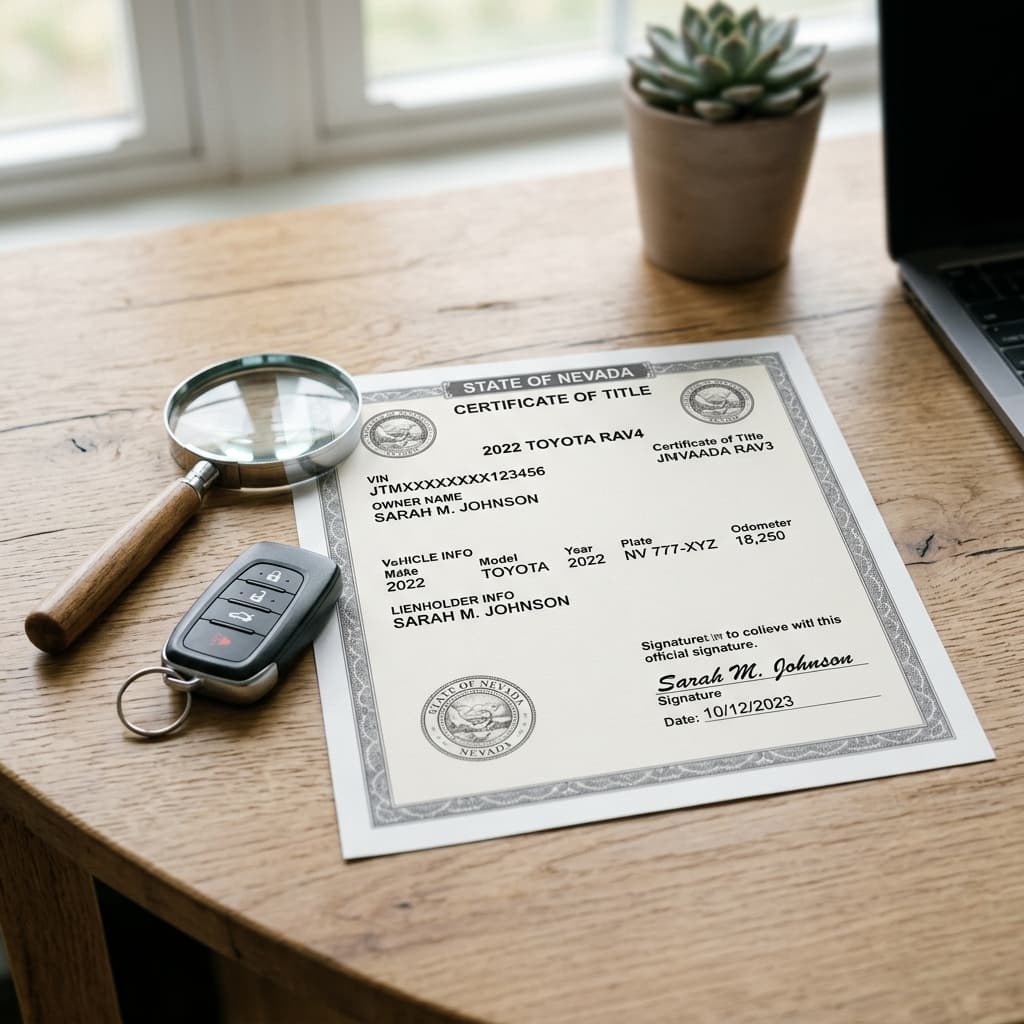
Think of a car title as the birth certificate and deed to a house rolled into one document. It is a legal form issued by a state's Department of Motor Vehicles (DMV) that certifies who owns the vehicle. Without a valid title, you cannot legally register the car, insure it, or drive it on public roads.
While titles vary slightly in appearance from state to state, they all contain the same critical data points that establish the vehicle's identity:
- Vehicle Identification Number (VIN): The unique 17-character code assigned to that specific car.
- Owner Information: The name and address of the person or business legally owning the vehicle.
- Lienholder Information: If the car is financed, the bank or lender will be listed here.
- Mileage: The odometer reading at the time of the last sale.
- Title "Brand": A designation that indicates if the vehicle has sustained severe damage.
When you buy a car, the seller signs the back of this document to "transfer" ownership to you. However, the most vital information isn't just who owns it, but what the state says about the car's condition.
Defining a Clean Title
When a seller says a car has a "clean title," they are referring to the specific legal status of the vehicle's paperwork. A clean title means that the vehicle has never been deemed a total loss by an insurance company. It indicates that, as far as the DMV knows, the car has not experienced catastrophic damage that would render it unsafe or legally unworthy of being on the road.
However, there is a major misconception among buyers that "clean title" equals "accident-free." This is not true.
A car can have a clean title and still have a history of accidents. For example, if a car is in a fender bender that costs $3,000 to fix, but the car is worth $15,000, the insurance company will pay for the repairs. The car is returned to the owner, and the title remains "clean." The title only changes status (or gets "branded") when the repair costs exceed a certain percentage of the car's value, usually between 75% and 90%.
Why a Clean Title Matters
For a used car buyer, a clean title is the baseline requirement for a safe investment. It impacts nearly every financial aspect of vehicle ownership.
Resale Value
A vehicle with a clean title holds its value significantly better than one with a branded or salvage title. If you decide to sell the car in three years, a clean title ensures you have access to the widest pool of buyers. Most dealerships will not accept trade-ins with branded titles, and many private buyers will scroll past your listing immediately if the title isn't clean.
Insurance Premiums and Eligibility
Major insurance carriers are often hesitant to insure vehicles with branded titles. Because it is difficult to determine the true value of a car that was previously totaled, insurers may refuse to offer collision or comprehensive coverage. If you buy a car with a clean title, you will generally have no issues securing full coverage at standard market rates.
Financing Availability
Banks and credit unions view vehicles as collateral for your loan. If you stop making payments, they repossess the car to recoup their money. Because branded title cars are difficult to resell and have uncertain values, most lenders will simply refuse to finance them. A clean title is almost always a requirement for securing an auto loan.
Common Title Issues to Watch Out For
If a title isn't "clean," it is "branded." A brand is a permanent designation on the title record that warns potential buyers about previous damage. Here are the most common brands you need to avoid.
Salvage Title
A salvage title is issued when an insurance company declares a vehicle a "total loss." This happens when the estimated cost of repairs approaches or exceeds the vehicle's fair market value. While some mechanics buy these cars to strip them for parts, they should generally be avoided by daily drivers due to structural integrity concerns.
Rebuilt Title
If a salvage car is repaired and passes a state inspection, it may be issued a "rebuilt" title. While this sounds better than "salvage," it is still risky. The quality of repairs can vary wildly, and safety systems like airbags or crumple zones may not have been restored to factory standards.
Flood Damage
Flood cars are among the most dangerous used vehicles on the market. Water ruins electronics, corrodes mechanical parts, and causes mold growth that can be impossible to remove. These issues often don't appear immediately but cause system failures months after purchase.
Odometer Rollback
While not always a specific "brand" on the paper title, odometer discrepancies are recorded in vehicle history reports. This occurs when a seller tampers with the digital or mechanical odometer to make the car appear to have lower mileage than it actually does, artificially inflating its price.
Lemon Law Buyback
This brand indicates that the manufacturer bought the car back from the original owner because of a persistent defect that they could not fix after multiple attempts. While the defect might have eventually been resolved, these cars have a history of being unreliable.
How to Spot a Problem Title
Sellers of problematic cars often try to hide the title status until the last possible moment, or they may "title wash" the car by moving it to a different state with looser regulations. Here is how you can spot a problem before you commit.
The Physical Inspection
Your eyes are your first line of defense. When inspecting the car, look for these red flags that contradict a "clean" history:
- Misaligned Panels: Large or uneven gaps between the door and the fender often indicate poor bodywork after a crash.
- Fresh Undercoating: Heavy black spray on the undercarriage might be hiding rust or structural welds.
- Dampness or Odors: Pull up the floor mats. If the carpet is wet or smells like mildew, walk away, it's likely a flood car.
- Mismatched Paint: Look closely at the reflection in the paint. If the texture (orange peel) or shade varies from panel to panel, it has been repainted.
The VIN Check
The most reliable way to verify a title is to check the data. A car's title status is tracked by the National Motor Vehicle Title Information System (NMVTIS). By running a VIN report, you can see the title history across state lines. If a car was declared "Salvage" in Florida but now has a "Clean" title in a different state, the VIN report will reveal that hidden history.
Professional Inspection
A mechanic can put the car on a lift and see things you can't. They can identify frame straightening marks, welded subframes, or water lines in the engine bay that suggest flood damage.
Risks of Buying a Car with a Problem Title
The temptation to buy a branded title car usually comes down to price. These cars are often listed for 20% to 40% less than comparable models with clean titles. However, the initial savings rarely justify the long-term risks.
Comparison: Clean Title vs. Branded Title
Feature | Clean Title | Branded (Salvage/Rebuilt) Title |
|---|---|---|
Safety | Factory safety standards intact | Structural integrity potentially compromised |
Resale Value | Standard market value | 20-40% lower than market value |
Financing | Easy to obtain | Very difficult or high-interest only |
Insurance | Full coverage available | Liability only (usually) |
Warranty | Manufacturer warranty valid | Warranty usually voided |
Safety Concerns
The biggest risk is your physical safety. Modern cars are designed with crumple zones to absorb impact. Once a car has been totaled and stretched back into shape, those crumple zones may not function correctly in a second accident. Furthermore, unscrupulous rebuilders may cut corners by installing fake airbags or bypassing safety sensors to clear dashboard warning lights.
Legal and Registration Issues
Some states have strict inspections for rebuilt vehicles. If you buy a car with a washed title and your state discovers its true history, they may revoke your registration or require you to go through an expensive and lengthy inspection process to make it road-legal.
Steps to Take Before Buying a Used Car
To ensure you are getting a clean title vehicle that is safe to drive, follow this checklist for every purchase.
- Research the Car's History: Before you even leave your house to see the car, get the VIN. Run a VinReport to check for title brands, accidents, and odometer readings. If the report shows a salvage history, you save yourself a trip.
- Verify the Seller's ID: When you meet the seller, ask to see their ID and the title. The name on the driver's license must match the name on the title. If it doesn't, they might be "curbstoning", selling a car they don't legally title in their name to avoid liability.
- Inspect the VIN Plate: Check the VIN plate on the dashboard and the sticker on the driver's door jamb. Ensure they match the VIN on the title document. If the VIN plate looks scratched or tampered with, it could be a stolen car.
- Get a Pre-Purchase Inspection: Take the vehicle to an independent mechanic, not one recommended by the seller. Ask them specifically to look for signs of previous structural damage or flood damage.
- Review the Title Document: Look closely at the paper title. Is the paper quality consistent? Does the font look altered? If the mileage area looks erased or blurry, do not buy the car.
What to Do If You Discover a Title Issue After Purchase
Scenario: You bought a car, and three months later, you go to trade it in, only to be told it has a "TMU" (True Mileage Unknown) or salvage history. This is a nightmare scenario, but you do have options.
- Contact the Seller: If you bought from a dealership, you have more leverage. Dealers are legally required to disclose title brands. If they failed to do so, they may be in violation of federal and state laws.
- Consult a Legal Professional: If the seller refuses to refund your money, you may need to sue for fraud. Consumer protection attorneys specialize in auto fraud cases.
- File a Complaint: Report the dealership or seller to your state's Attorney General and the Better Business Bureau. While this might not get your money back immediately, it creates a paper trail that can help your legal case.
Real-Life Examples
The "Hurricane Special"
In 2018, a buyer in Texas purchased a luxury SUV for a remarkably low price. The title was clean, and the car looked pristine. Two months later, the electrical system began to fail, windows wouldn't roll down, and the infotainment screen went black. A mechanic pulled the door panels off and found dried mud and rusted speakers. The car had been in a flood, dried out, and sold before the insurance data hit the title report. A comprehensive vehicle history report prior to purchase would have flagged the car's origin in a flood zone.
The Odometer Illusion
A college student bought a Honda Civic showing 80,000 miles. It ran well for a month before the transmission failed. The repair shop noted that the wear on the suspension suggested the car had significantly higher mileage. A deeper VIN check revealed the car had been serviced at a dealership two years prior with 180,000 miles on the clock. The previous owner had rolled back the digital odometer to increase the selling price by thousands of dollars.
Conclusion
A clean title is the foundation of a smart used car purchase, but it isn't the whole story. While it protects you from the worst-case scenarios, like buying a car that was previously crushed or flooded, it doesn't guarantee the car is perfect.
The used car market requires vigilance. By combining a physical inspection with a trusted mechanic's review and a comprehensive vehicle history report, you can strip away the uncertainty. Transparency is the key to peace of mind. Don't let a seller's smooth talk override the hard data. Take the time to verify the title, check the history, and drive away with confidence knowing exactly what you bought.