How to Determine Salvage Value of a Car Before Selling or Repairing
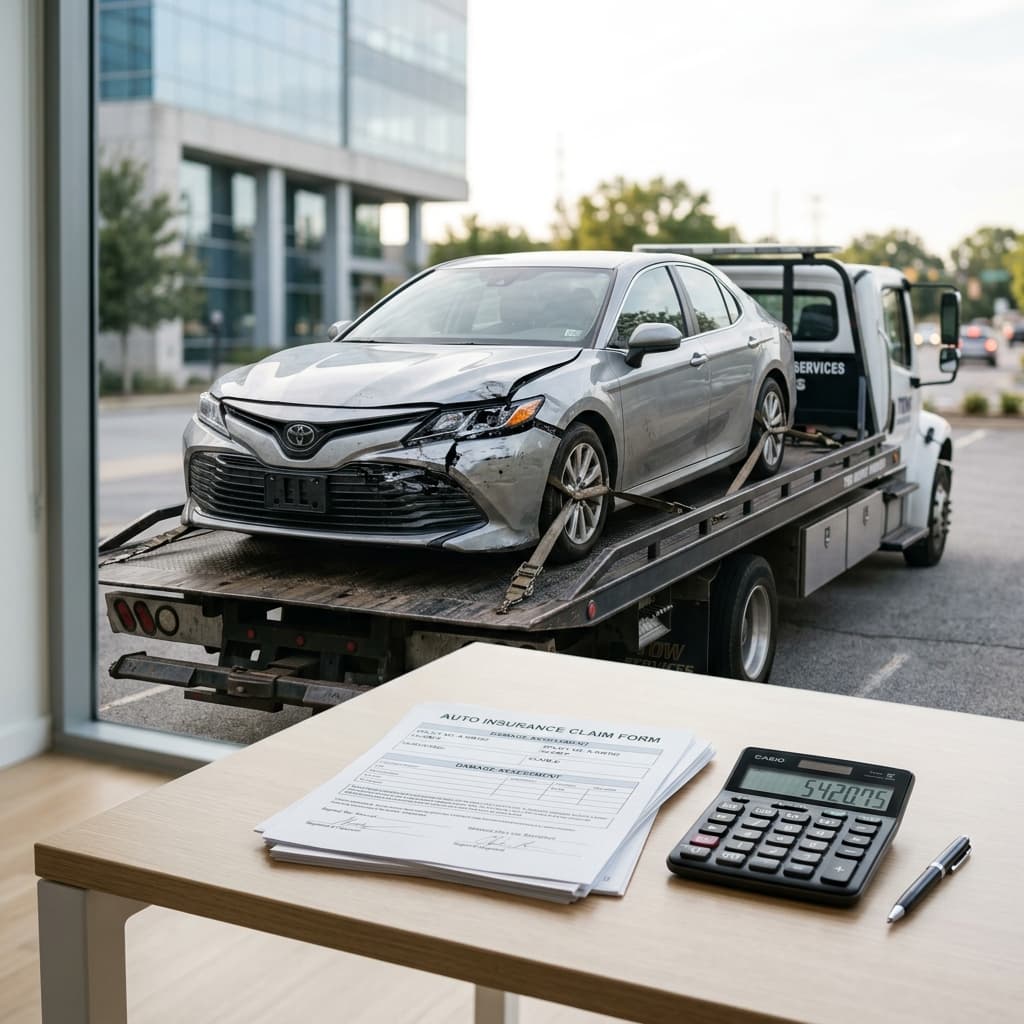
Dealing with a damaged vehicle after an accident is stressful. Beyond the immediate shock of the collision and the logistical headache of towing, you are quickly faced with a complex financial decision. Whether your insurance company has declared the car a "total loss" or you are sitting on a non-running vehicle in your driveway, understanding the financial worth of that damaged asset is critical. This specific worth is known as the "salvage value."
Many vehicle owners assume that once a car is wrecked, its value drops to zero or is strictly determined by the insurance adjuster. However, a damaged vehicle still holds residual value, primarily determined by its scrap metal weight and the resale potential of its remaining usable parts. If you don't know this number, you risk accepting a lowball insurance payout or selling the car to a junkyard for a fraction of what it is worth.
Understanding how to calculate or estimate this value gives you leverage. It helps you decide whether to accept an insurance settlement, buy the car back to repair it (owner retention), or sell it privately to a hobbyist or parts liquidator. By stripping away the confusion surrounding industry jargon and calculation formulas, you can turn a financial loss into a managed transaction.
Understanding Salvage Value
To make an informed decision, you first need to understand exactly what "salvage value" means in the automotive and insurance industries.
What is Salvage Value?
When an insurance company declares a car a total loss, they typically take ownership of the damaged vehicle and sell it to recoup some of their losses. The amount they can sell it for, usually to a salvage yard, auction house, or parts recycler, is the salvage value.
However, if you choose to keep the vehicle (often called "retaining salvage"), the insurance company will deduct this amount from your final settlement check. Therefore, the salvage value isn't just a theoretical number; it is a real dollar amount that directly impacts your pocket.
Factors Influencing Salvage Value
Determining this value isn't as simple as weighing the car. Several dynamic factors influence how much a salvage buyer is willing to pay:
- Make and Model: High-end luxury cars or popular vehicles like a Toyota Camry often have higher salvage values because their parts are in high demand.
- Year and Mileage: Newer cars with lower mileage generally have more pristine, usable parts (like engines and transmissions) than older, high-mileage clunkers.
- Extent and Type of Damage: A car with rear-end damage may still have a perfectly good engine and front-end body panels. Conversely, a flood-damaged car may have very little salvage value because the electronics and mechanical systems are compromised.
- Pre-Accident Condition: A car that was in excellent shape before the accident will yield better spare parts than one that was already rusting.
- Current Scrap Metal Prices: If the car has no usable parts, its value is dictated by the current market rate for steel and aluminum.
The Importance of Knowing Your Car's Salvage Value
Why should you go through the trouble of estimating this number? The answer depends on your end goal: getting rid of the car or fixing it up.
For Selling a Damaged Car
If you do not carry collision insurance, or if you simply want to sell a broken-down car privately, you are entering a negotiation. Junkyards and "cash for cars" services are businesses designed to buy low and sell high. If you know your car's salvage value is approximately $1,200 based on its usable parts, and a dealer offers you $300, you know to walk away or negotiate harder. Knowledge protects you from leaving money on the table.
For Repairing a Damaged Car
If you love your vehicle and want to keep it despite the insurance company declaring it a total loss, you need to do the math. This is known as "owner retention." The insurer will pay you the Actual Cash Value (ACV) of the car minus the deductible and the salvage value.
For example, if your car's ACV is $10,000 and the salvage value is determined to be $2,000, your check might be $8,000. You then have $8,000 and the damaged car. You must determine if that $8,000 is enough to repair the vehicle to a safe, road-worthy condition. If the salvage deduction is too high, you might not have enough cash left to fix it.
Total Loss Thresholds by State
It is also vital to understand that states use different methods to decide when a car is "totaled." Some use a strict percentage (Total Loss Threshold), while others use a "Total Loss Formula" (TLF).
State Calculation Method | Description | Example |
|---|---|---|
Percentage Threshold | The car is totaled if repairs exceed a specific percentage of the car's pre-accident value. | Alabama (100%) |
Total Loss Formula (TLF) | The car is totaled if (Cost of Repair + Salvage Value) > Actual Cash Value. | California |
Insurer Discretion | The state allows the insurance company to decide, provided they follow general fairness guidelines. | Various |
Knowing which rule your state follows helps you predict whether your car will be branded with a salvage title.
Methods to Determine Salvage Value
Since there is no "Blue Book" specifically for wrecked cars that is accessible to the general public, you have to use a combination of methods to get an accurate estimate.
Using Online Valuation Tools
Several online resources can help you ballpark the figure. While sites like Kelley Blue Book (KBB) and NADAguides primarily focus on undamaged cars, you can use their data as a baseline.
- Determine the ACV: Find the private party value of your car in "Fair" condition.
- Apply a Percentage: A common industry rule of thumb is that salvage value is often 20% to 40% of the vehicle's ACV. This is a rough estimate and varies heavily by vehicle type.
There are also specialized online salvage calculators and "instant offer" sites (like Peddle or Wheelzy) where you can input your car's details and damage level to get a guaranteed cash offer. These offers serve as a concrete baseline for your car's minimum salvage value.
Consulting with a Professional Appraiser
If you are dealing with a high-value classic car, a heavily modified vehicle, or a dispute with your insurer, online calculators may not be accurate enough. In these cases, hiring an independent auto appraiser is the best route. They can provide a certified report detailing the value of the vehicle's specific parts and its marketability at auction.
Worried that the "great deal" you found online might actually be a previously wrecked car with a hidden history? Don't take the risk.
Step-by-Step Guide to Using Online Valuation Tools
If you choose the DIY route to estimate your car's salvage value, follow these steps to ensure you get the most accurate number possible.
Gathering Necessary Information
Before you open a browser, have your data ready. You will need:
- The VIN (Vehicle Identification Number): This ensures you are looking up the exact trim level and engine type.
- Current Mileage: Be precise.
- List of Damage: Note exactly what is broken. Is the engine running? Are the airbags deployed? Is the frame bent?
- Photos: Take clear photos of all four corners, the interior, and the specific damage.
Entering Data into the Valuation Tool
When using a site like KBB to find the baseline ACV, be honest about the pre-accident condition. If the tires were bald and the seats were torn before the crash, do not rate the car as "Excellent."
If you are using a salvage bid site (like Copart Direct or similar), input the damage details truthfully. If you fail to mention that the car doesn't start, the final offer may be rescinded when the tow truck arrives.
Interpreting the Results
Once you have an ACV from KBB and a cash offer from a salvage buyer, compare them.
- Scenario A: KBB ACV is $10,000. Cash offer from salvage buyer is $2,500. Your salvage value is effectively 25%.
- Scenario B: You check recent auction results for similar wrecked cars and see they are selling for $3,000. This confirms the market demand is higher than the instant cash offer.
When to Consult a Professional Appraiser
While online tools are convenient, they rely on algorithms that may miss the nuances of your specific vehicle. There are distinct times when paying for a professional opinion is worth the investment.
Complex Damage Scenarios
If your vehicle has rare options, expensive aftermarket modifications (like a lift kit, custom wheels, or performance headers), or is a vintage model, standard database tools will undervalue it. An appraiser inspects the vehicle in person to document these value-adding components that are still intact despite the accident.
Disagreement with Insurance Company
This is the most common reason to hire an appraiser. If your insurance company claims your salvage value is $4,000 (and wants to deduct that massive amount from your check), but you believe the wreckage is only worth $1,000, you have a dispute. Most insurance policies have an "Appraisal Clause." This allows you to hire your own appraiser to negotiate a fair value with the insurer's appraiser. If the difference in value is significant, the cost of the appraiser often pays for itself in the recovered settlement money.
Common Mistakes to Avoid When Estimating Salvage Value
Navigating the world of totaled cars is tricky. Avoid these common pitfalls to ensure you don't lose money.
Overestimating Repair Costs
When deciding whether to keep a salvage car, owners often underestimate the cost of labor and parts. They assume they can "fix it for cheap." Remember that modern cars have complex sensors and calibration requirements. If you overestimate the repair costs, you might let the insurance company total a car that was actually saveable. Conversely, if you underestimate repairs, you might retain a salvage car that becomes a money pit.
Neglecting Market Demand
Just because a car is rare doesn't mean it has high salvage value. If you have a rare imported car, but there are no other owners of that car looking for parts, the demand is low. Conversely, a standard Ford F-150 might have high salvage value simply because there are millions of them on the road, and body shops constantly need replacement doors and bumpers. Always consider the "liquidity" of the parts.
How Salvage Value Affects Insurance Claims
Your understanding of salvage value is most critical during the insurance claim process.
Totaled Vehicle Claims
As mentioned, the salvage value is a key variable in the Total Loss Formula. If the salvage value is high, it is easier for the car to be totaled.
- Formula: Cost of Repairs + Salvage Value > ACV.
- Impact: If the insurer thinks they can sell your carcass for a high price, they are more likely to write it off as a total loss rather than pay for repairs.
Partial Damage Claims
Even if the car isn't totaled, a high salvage bid can influence the insurer's decision. However, in partial damage claims, you should also be aware of "Diminished Value." This is different from salvage value; it is the loss of resale value simply because the car now has an accident history.
Resources for Further Research
To get the most accurate data, rely on authoritative sources rather than forum hearsay.
Government Agencies
Check your state's Department of Motor Vehicles (DMV) or Department of Insurance (DOI). For example, the North Carolina Department of Insurance publishes specific guides on total loss settlements and consumer rights regarding salvage retention. These sites will give you the exact threshold percentages for your state.
Industry Associations
- National Association of Insurance Commissioners (NAIC): Offers consumer guides on how auto claims are settled.
- National Insurance Crime Bureau (NICB): Provides the VINCheck service to help you see if a car has already been reported as a salvage title by participating insurers.
Deciding what to do with a damaged vehicle is a major financial crossroads. By accurately determining the salvage value, you move from a position of stress to a position of control. Whether you choose to negotiate a higher payout, sell the scrap for a fair price, or restore the vehicle, the data is your best tool.